Bezel vs Prong: How Stones Are Set in Gold
Prongs show off a stone. Bezels keep it. Here is how each setting works and why the difference matters for anything handled often.
If you are comparing a bezel setting vs prong setting, the short answer is this. A prong shows more of the stone. A bezel holds it better. For a ring that sits on a quiet hand, either can work. For anything that gets picked up, squeezed, packed, moved and displayed over years, the bezel is the safer choice. This article explains how each setting works, where each one fails, and what to look for before you spend serious money.
What is the difference between a bezel and a prong setting?
A setting is the metal that holds a gemstone in place. The stone does not stay put on its own. It is the metal around it that decides whether the stone is still there in ten years.
A prong setting uses small metal claws. Most prong settings use four or six. The claws rise from a base, curve over the edge of the stone and press down on its upper surface. The stone sits between them like an egg in a cup with the lid held open by fingers. Light enters from almost every side, which is why prongs are the classic choice for diamond rings.
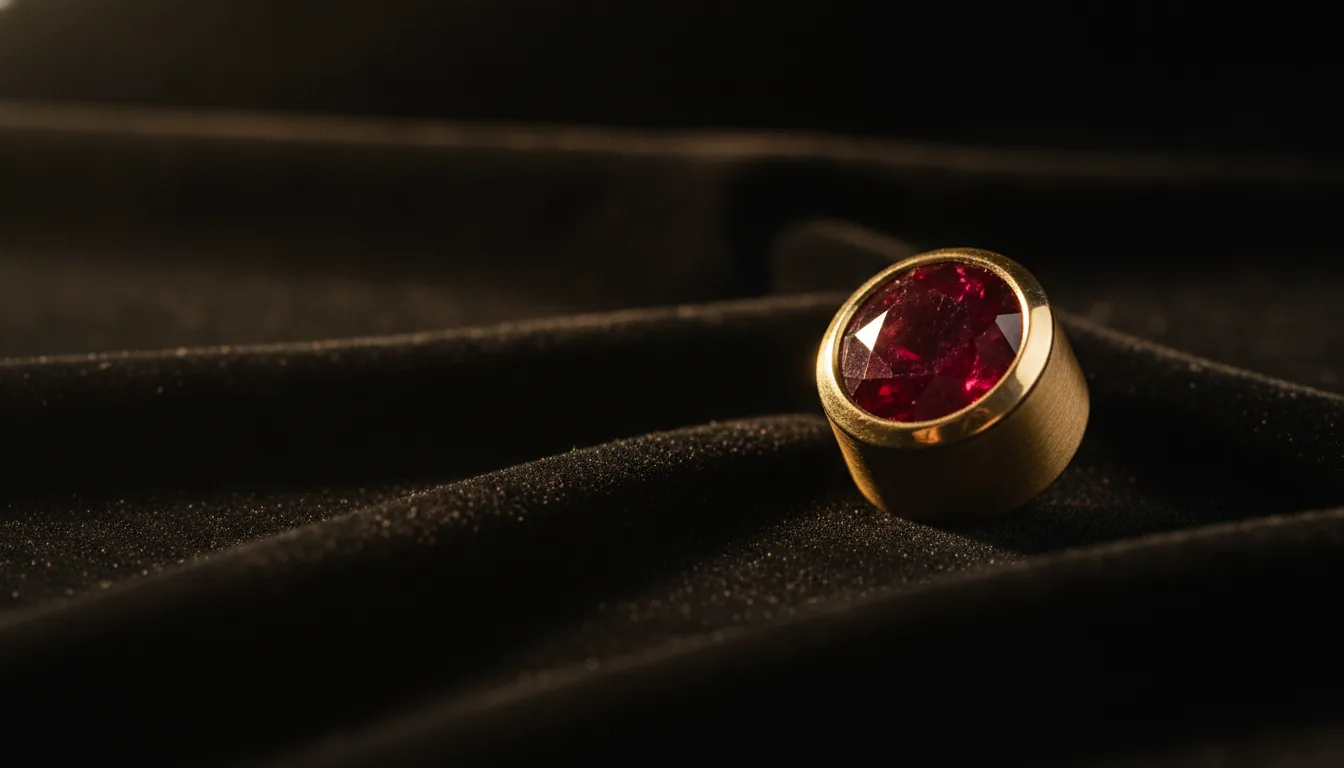
A bezel setting works the other way. A thin wall of metal wraps the full edge of the stone. The jeweller shapes a collar to fit the stone exactly, drops the stone in, then presses the top of the collar inward until the metal grips the rim. There are no loose points. The stone is held all the way around, not at four or six spots.
Both methods are old and both are respected. They are built for different jobs. A prong is built to show the stone. A bezel is built to keep it.
Why do prong settings fail?
A prong setting has a simple weakness. The whole stone depends on a few tiny points of metal. If one point bends, wears or snaps, the stone loses part of its grip. If two fail, the stone is gone.
Gold is a soft metal, and 18K gold is softer than most people expect. Fine claws are thin by design, because thick claws would hide the stone. Thin soft metal wears. Over years of contact with surfaces, fabric and skin, the tips flatten and the grip loosens. Jewellers who service prong rings regularly check the claws for this reason, and many of them recommend a check at least once a year.
There is a second problem. Claws stick up. They catch on cloth, hair and other objects. Every snag pulls the claw a little. One snag does nothing. A thousand snags over a decade can open a claw enough for a stone to rattle, and a rattling stone is a stone on its way out.
Impact is the third risk. A hard knock on a claw can bend it outward. The stone may stay in for now, but the grip is already weaker, and the owner often does not notice until the stone is missing. This is the quiet way collectors lose stones. It is rarely dramatic. It is usually slow.
None of this makes a prong setting poor craftsmanship. A well-made prong ring on a careful owner can last a lifetime. The point is that prongs ask for care and for regular inspection. They reward a gentle life and punish a rough one.
How does a bezel protect a stone?
A bezel removes most of those risks. There are no points to bend and nothing to snag. The metal wall surrounds the stone and takes the impact before the stone does. If something knocks the piece, the collar absorbs the hit. The stone, tucked slightly below the rim of the metal, stays out of harm.
Grip is the other advantage. In a prong setting, the stone is held at a handful of contact points. In a bezel, it is held along its whole outline. Force is spread out instead of concentrated. A stone in a good bezel does not wobble, even after years of use.
Bezels also protect stones that are fragile. Some gemstones have natural weak points, such as a cleavage direction or a thin edge, and a sharp knock at the wrong angle can crack them. A collar of gold shields those edges. This is one reason jewellers often choose bezels for softer or more delicate stones, and for any piece worn or handled daily.
There is a quieter benefit too. A bezel is easier to live with. You do not need to treat the piece as a delicate instrument. You can pick it up, turn it over and put it on a shelf without worrying that a claw is about to catch on something. For a collectible that people will want to hold, that matters more than it sounds.
If you want to understand what makes a stone worth protecting in the first place, the guide on gem quality for collectors covers cut, colour and clarity in plain terms.
What does a bezel cost you in sparkle?
Nothing is free. A bezel covers the edge of the stone with metal. That means less light enters from the sides, and a little less of the stone is visible. A diamond in a thin bezel will look a touch quieter than the same diamond in a six-prong head, which lets light pour in from every direction.
Good jewellers reduce this cost in several ways. They keep the collar thin. They cut it low, so only a narrow band of metal touches the stone. They polish the inside of the collar so it reflects light back into the gem. Some cut small openings in the base so light can reach the stone from below. A thin, low, well-polished bezel gives up very little.
Many people also find that a bezel looks cleaner. The outline is a smooth ring of gold around the stone, like a frame around a picture. Collectors who prefer a modern, understated look often choose it for that reason alone. It looks deliberate rather than decorative.
The honest summary is that prongs win on light and bezels win on safety. You choose based on what the object will do in its life. If it will sit behind glass, prongs are fine. If it will be handled, a bezel is the better bargain.
Why does a soft body change the rules?
Most advice about settings assumes a hard, rigid base such as a ring band or a pendant. A soft object changes the problem. Fur, stuffing and fabric flex when you hold them. They compress, twist and spring back. Anything fixed to them has to cope with constant small movement.
Think about what that does to a prong. A claw mounted on a surface that bends can be pulled in different directions each time the piece is squeezed. Fur can wrap around the claws and tug at them. A figure that is lifted from a shelf, carried to a desk, passed to a friend and returned will meet far more contact than a ring on a finger.
This is why a bezel is the natural answer for a collectible with a soft body. The collar is a closed shape. It does not catch fur. It does not have points to be pulled. It sits flat and holds the stone even when the surface behind it moves. Lux Monsters uses solid 18K gold settings for its figures because a closed collar suits an object people will want to pick up. The article on how gold bezels are set on plush explains the method in more detail.
The same logic applies to any object that travels. Anything packed in a case, carried in a bag or moved between rooms gains from a setting that cannot snag. A bezel is the safer choice for these jobs, which is why you see it on watches, on signet rings and on pieces meant for daily use.
How can you check a setting before you buy?
You do not need a jeweller to spot a weak setting. You need a few minutes and some patience.
Start with the stone. Hold the piece close to your ear and tilt it gently. A stone that rattles or clicks is loose. Do not buy it. Then look at the metal around the stone. In a prong setting, each claw should touch the stone firmly and sit evenly. If one looks shorter, thinner or bent, ask why. In a bezel, the collar should be smooth and even all the way round, with no gaps between the metal and the stone.
Next, run a fingertip lightly over the setting. It should feel smooth. A sharp edge means rough finishing, and rough finishing often points to rushed work elsewhere.
Ask what the metal is. A reputable seller can tell you the karat and point to a hallmark, which is the official mark that records the gold content. If you want to know how the marking system works, the materials page explains the gold and stones in plain terms. Ask also what the stones are and whether they are natural. A good seller will answer without hesitation.
Finally, ask who stands behind the piece. A signed certificate and a clear policy on repairs tell you the maker expects the piece to last. A seller who cannot discuss the setting probably did not think hard about it.
Choose the setting that matches the life of the object
The best setting is not the most beautiful one in a photograph. It is the one that is still holding the stone when the piece has been handled for ten years. Prongs are a fine choice for objects that stay still. Bezels are the better choice for objects that move. When a collectible is meant to be held, the metal that wraps the stone completely is the one worth paying for.