Inside the Paris Factory
The origin of Lux Monsters begins in a forgotten Paris factory, with an Alchemist, unstable gold, and creations that should never have existed.
There is a building in the outskirts of Paris that does not appear on any modern map. Its doors are still there. Its chimney is still there. For most of its existence, it produced nothing the world could name. That is where Lux Monsters began.
The factory that made nothing
From the street, the building looks abandoned. Grey stone. Iron shutters. A single courtyard paved in stones that have carried the weight of two centuries. Ivy on the back wall. No sign above the door.
Neighbours called it the quiet factory. Deliveries arrived at odd hours. Crates of raw gold, uncut stones, jars of liquid with no label. Nothing ever left. No trucks pulled away loaded with product. No buyers stepped out of black cars. Whatever the building produced, it kept.
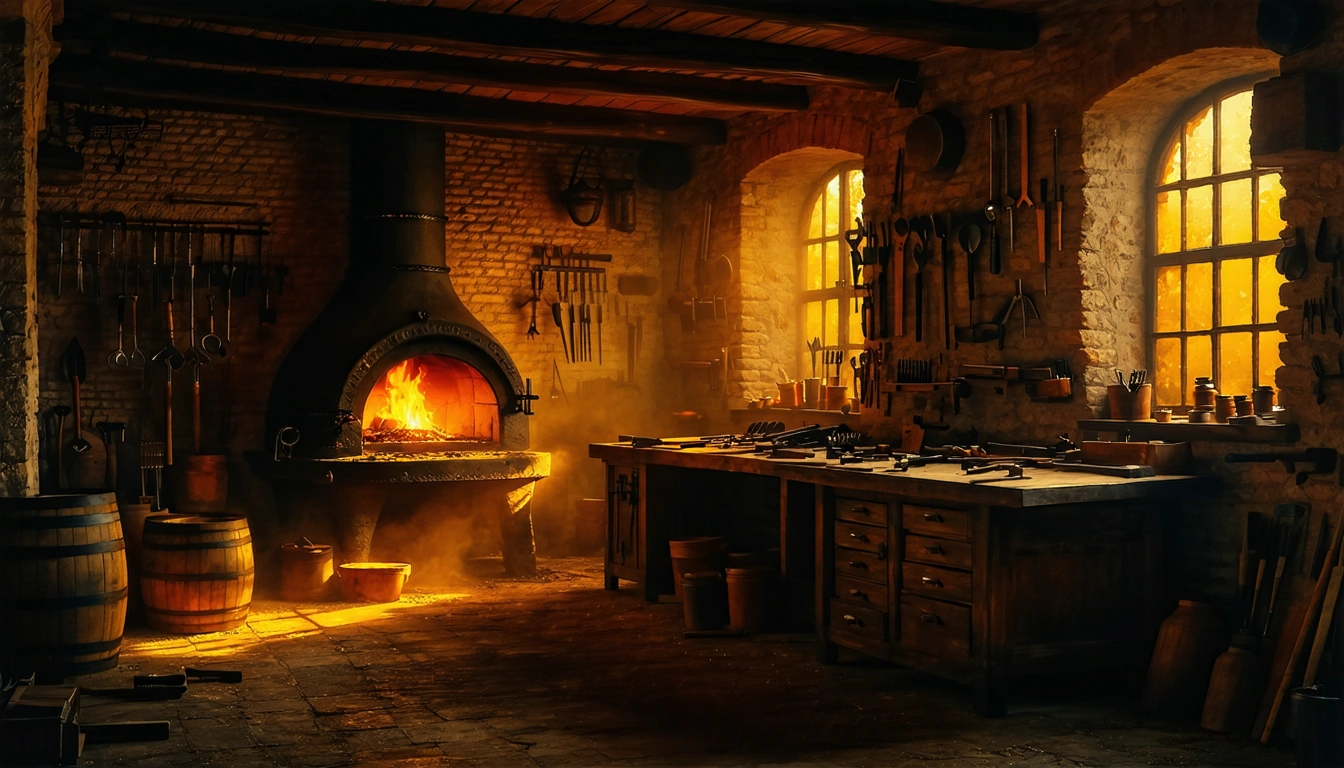
Inside, the walls were white. The floors were tile. The air carried the smell of cold metal and something sweeter, harder to place. A furnace burned in the centre of the main hall at a temperature no one ever wrote down.
The man who ran it was known only as the Alchemist.
The Alchemist
You will not find a photograph of him. You will not find a name on any registry. The workers who passed through the factory in its later years remembered only details. A linen shirt, always clean. Hands steady enough to hold a thread of molten gold without a tremor. A habit of standing in front of the furnace for hours without speaking.
He did not describe his work as manufacturing. He called it transformation. The distinction mattered to him. A manufacturer repeats. A transformer changes the nature of a thing. He did not want to repeat anything.
He arrived at the factory young and left it old. The years between are unaccounted for. What is known is that he did not marry, did not travel, and did not sell. He worked. He watched the fire. He waited.
What he was trying to do
For years, he poured gold. He added stones. He added materials he found in places you would not think to look. Graveyard soil. Rainwater collected in November. Honey that had crystallised for twenty years in the cellar of a closed bakery. Ingredients with no clear purpose and no predictable result.
Most of what he produced was ordinary. A bar of gold. A tarnished lump of something that looked like lead. A pool of cooled metal flecked with dust. He broke them down and started again.
He was not after jewellery. He was not after ingots. He was after a response. He wanted the material to do something on its own. He wanted to put his hand near a finished piece and feel it acknowledge him.
For years, nothing did.
The night the gold moved
The record of what happened on the night the work turned is thin. There is a date written in graphite on the back of a ledger. There is a kettle found in the morning still warm, in a room where no one had been.
During an unstable fusion, gold moved. Not the way gold moves in a crucible, falling in on itself under heat. It moved against the direction of gravity. It rose into a shape the Alchemist had not poured and did not touch. It held the shape. It cooled without losing it.
He did not melt it down. He put it on a shelf in the back room and sat with it until morning.
Over the following weeks, other pieces began to behave in the same way. A figure he had shaped in wax and cast in silver was found, the next day, in a posture he had not carved. A stone set in a bezel no larger than a thumbnail began to catch light that was not in the room. He wrote nothing. He kept working.
The first creations
The figures that emerged from that period are the earliest Lux Monsters. They were never meant to leave the factory. The Alchemist produced them for no one. He placed them on long wooden shelves behind a locked door and let them sit in the half-light, undisturbed.
Each one carried features that could not be explained by the tools on the workbench. An expression that shifted slightly depending on the angle of your approach. A texture that felt warm in a room kept deliberately cold. A stillness that was not the stillness of an object.
The Alchemist did not sell them. He did not exhibit them. When visitors arrived, which was rare, he closed the door to the back room and offered them coffee in the courtyard instead.
Why the world never knew
The factory operated quietly for reasons that were partly the Alchemist’s choice and partly the nature of the work. He understood what he was producing. He was not certain the world was ready to hold it. The creations were not dangerous. They were unfinished in a way the word was not built to describe. They needed time. They needed to be watched, the way a young vine is watched in its second year, before anyone decides what it will become.
He passed in the early hours of a winter morning. The furnace was out. The back room was locked. A notebook was on the desk, open to a blank page.
The factory stayed closed for a long time after that. The creations stayed on the shelves. The building kept its silence.
What Lux Monsters is now
Lux Monsters is the continuation of that work. Not a replica. Not a tribute. The same back room, opened with care. The same furnace, relit. The same approach to material, with the patience the Alchemist built into the walls.
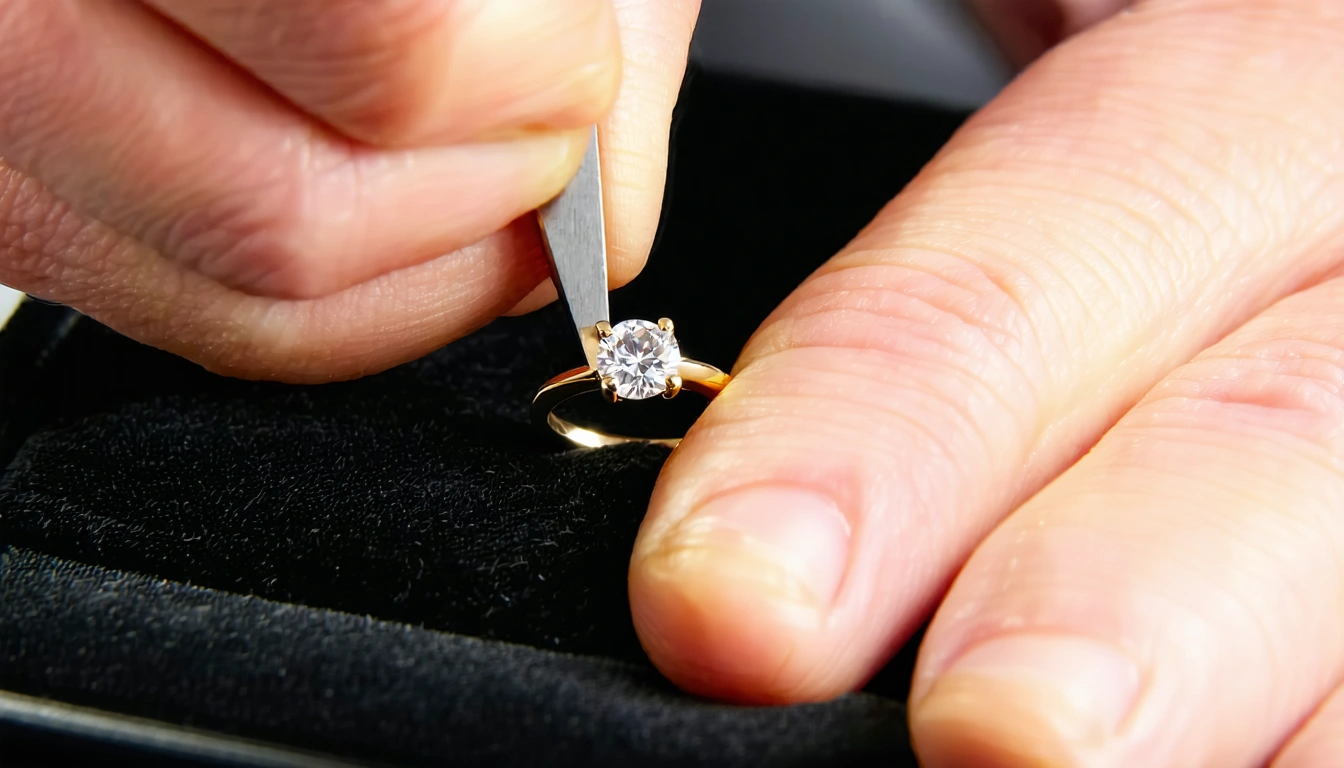
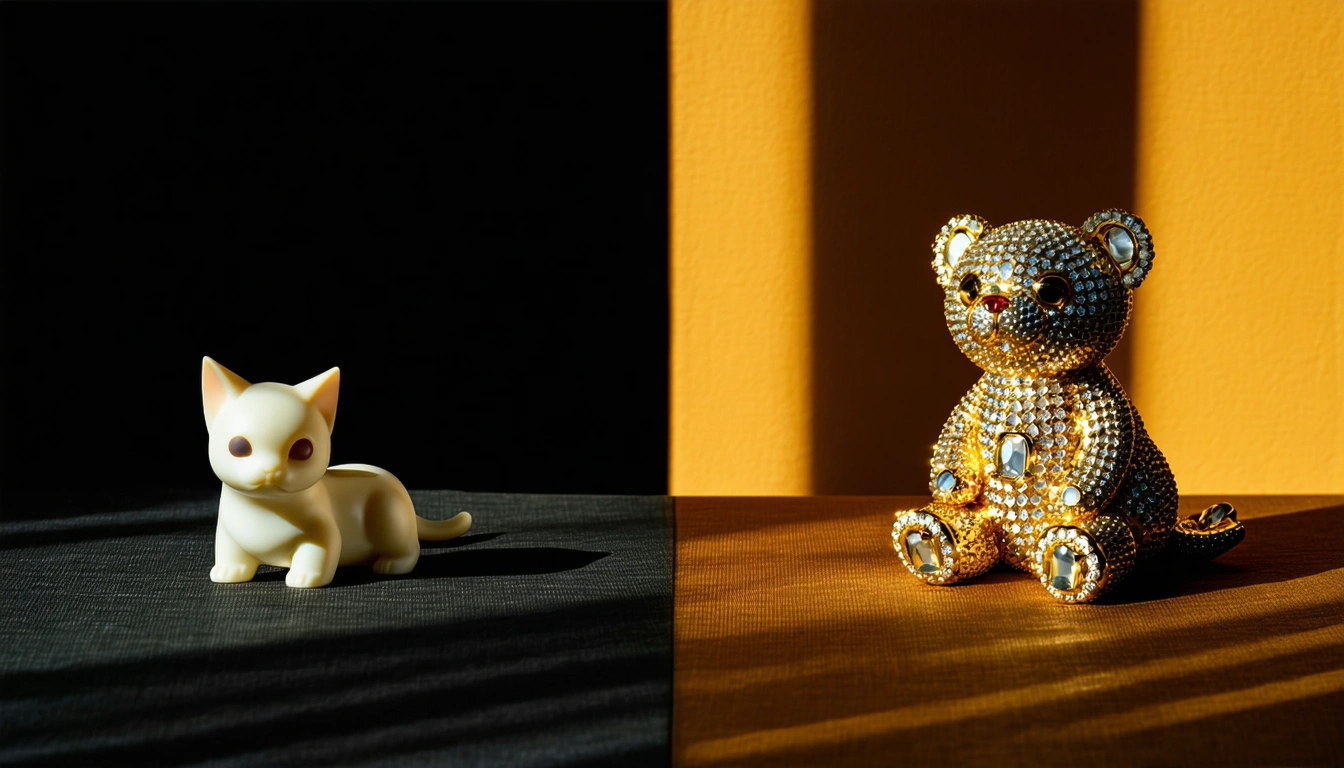
Edition 01 is twelve characters. NoirRib, SplitWink, SplitGrin, PatchPanic, TearBunny, SootSniff, InkBunny, BoneBloop, ChonkGloom, CaratCry with its diamonds, RubyRuin with its rubies, and Mint Slime with its sapphires. 18K gold bezels, real stones, plush bodies built to a weight and a hand you do not forget.
Fifty pieces in total across three tiers. Then a new edition, every two months. That is the rhythm. That is what the factory can sustain.
The materials, now
The materials the factory uses today are chosen with the same stubbornness the Alchemist brought to the work. Gold is sourced from a single refinery in the Jura, one the house has used since the reopening. Diamonds are cut in Antwerp, matched in pairs where the design calls for pairs, never substituted to meet a delivery. Rubies come from a single Burmese parcel that was bought, in full, years ago and held for this use. Sapphires come from Ceylon, hand-picked for a specific shade of cool green that photographs badly and looks extraordinary in a room.
None of this is visible on a product page. Most of it you will only see when you hold the object in your hand, in good light, at the distance at which good objects are meant to be read.
The part you take home
What you hold when you hold a Lux Monster is not a collectible in the ordinary sense. It is an object that was considered for a long time, by someone who refused to hurry, in a building that still carries the temperature of the first experiments. The gold is real. The stones are real. The provenance is an address in Paris that you will not find unless you know where to look.
The Alchemist did not make objects. He made transformations. The factory continues.