Why Lux Monsters Uses 18K Gold, Not 24K
Pure gold is soft enough to dent with a thumbnail. 18K is what every luxury house actually uses. Here is why.
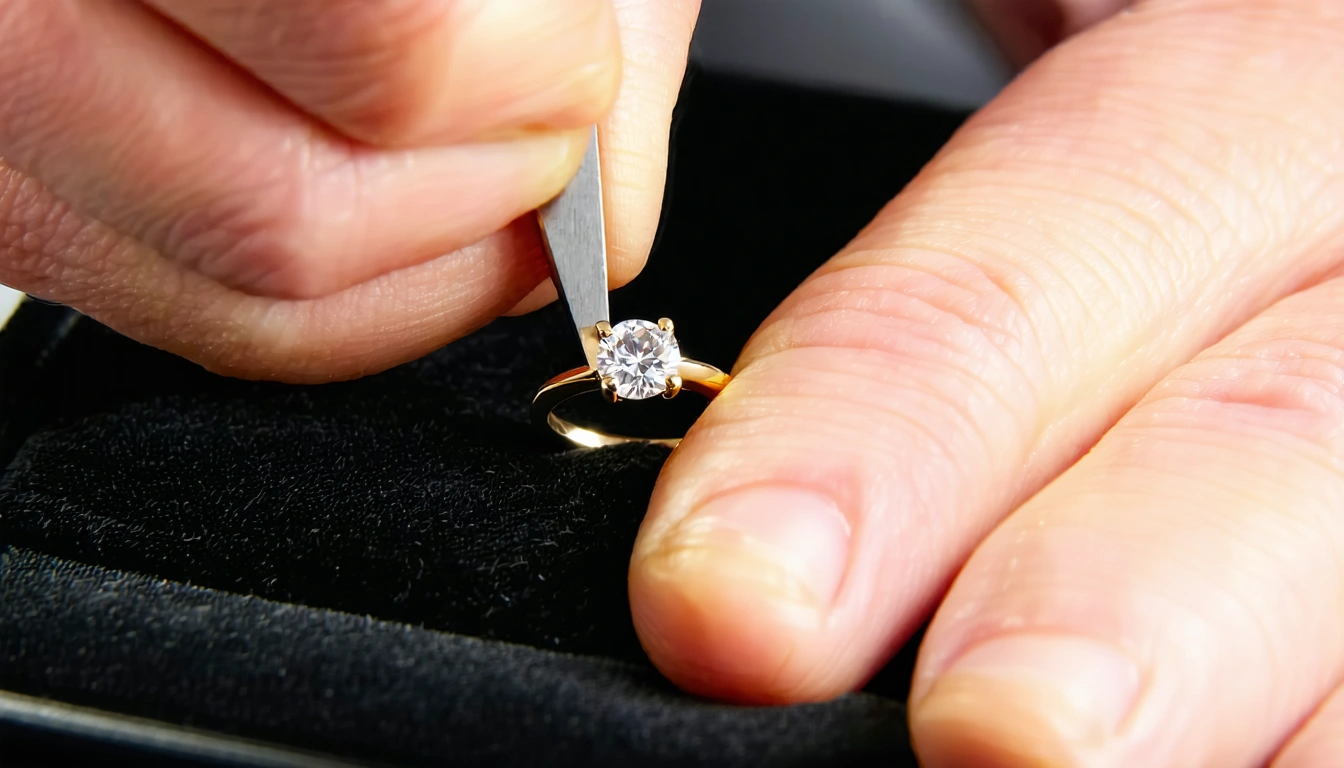
You pick up the figurine. You find the stamp. It reads 750, which is the international mark for 18K gold. Somewhere in the back of your head a small voice asks why anyone would use 18K when 24K is the real thing.
The short answer is that 24K gold is too soft to be worn, set with stones, or handled. Every serious luxury house in the world works in 18K, not because they are cutting corners, but because 18K is the material engineered to survive contact with the world. This is a post about what the numbers actually mean and why the choice is not a compromise.
What 24K gold actually is
Pure gold is 24 parts out of 24, meaning 99.9 percent gold by mass. It is golden in the way you expect gold to look. It is also astonishingly soft. You can dent a 24K coin with a fingernail. Left alone on a desk, a 24K ring slowly loses its round shape. This is why pure gold is sold as bullion and stored in vaults, not worn or displayed. It is a reserve asset, not a finished material.
Softness sits in the atomic structure. Gold atoms are packed in a face centered cubic lattice, which slides easily when pushed. There is nothing inside pure gold to stop the slide. When a jeweler tries to set a stone into a 24K bezel the metal deforms instead of gripping. When someone taps a 24K engraving with a fingertip the letters flatten. These are not hypothetical problems. They are the reason the craft invented alloys in the first place.
What 18K gold actually is
18K gold is 18 parts out of 24, which works out to 75 percent gold by mass. The remaining 25 percent is other metals added on purpose, usually some combination of copper and silver. These extra metals insert themselves into the gold lattice and interrupt the slide. The result is a material that is still unmistakably gold in color and weight, still chemically inert, still hypoallergenic in most formulations, and now hard enough to hold a polished edge, grip a stone, and take an engraving.
The 18K family splits further based on which alloy you pick.
Yellow 18K uses roughly equal parts copper and silver. This is the classic warm gold you see in fine jewelry from Cartier or Van Cleef and Arpels. It is the reference we use for Lux Monsters bezels.
Rose 18K shifts the balance toward copper. The copper pulls the color warmer and slightly pink. It is popular in Italian houses and in modern pieces.
White 18K uses palladium or nickel to bleach the yellow out. White gold requires a rhodium plating on top to reach its coldest, most silver color. The plating wears down in a few years, which is why white gold pieces need re plating every so often.
All three are 750 grade. The hallmark does not care which alloy palette you chose.
Why hardness matters on a collectible
A Lux Monster figure has 18K gold settings wrapping each gem. In use, the piece is picked up, passed around, set on shelves next to other objects, photographed against hard surfaces, and sometimes travelled with. These are not stress conditions you would wish on a ring, but they are real contact.
If those bezels were 24K, the first real contact with another object would round the corners of the engraving. The first time a prong caught on a sleeve it would bend and the gem would sit crooked. A drop onto a marble counter would leave a permanent dimple. Within weeks the piece would stop looking like what it was on the day it shipped.
18K solves that. The alloy holds its geometry under ordinary handling. The bezel stays square. The prongs stay in place. The engraving edges stay crisp. The piece ages the way luxury objects are supposed to age, which is to say slowly, by acquiring a patina rather than losing a shape.
This is also why every luxury watchmaker who works in gold, without exception, works in 18K. A Patek Philippe case, a Rolex Day Date, a Richard Mille crown, an Audemars Piguet lug. Each is 18K. You do not find Patek cases in 24K because Patek knows how a 24K case would survive a single wearing.
The grades luxury houses quietly reject
Below 18K the math gets harder to defend.
14K gold is 58.5 percent gold, 41.5 percent alloy. It is significantly harder than 18K, but the alloy percentage is high enough that the color shifts noticeably paler and the chemistry starts to matter. 14K tarnishes, develops visible alloy at worn spots, and reacts more with skin oils. It is what mass market jewelry is made from. It is not what luxury uses. Tiffany, Cartier, Bulgari, Chopard, Harry Winston all use 18K as their gold standard.
9K gold is 37.5 percent gold. It is a different beast. Chemically it behaves more like the alloy than like gold, and the color is openly pale. It is mostly a European and British mass market grade. It has no place in a serious luxury context.
Below that point you leave gold behind and enter gold plating territory, which is a completely different conversation about a coating of real gold over a base metal core. Plating wears off. It is not a material. It is a finish.
The hallmark as proof
Every 18K component on a Lux Monsters piece is hallmarked 750. The hallmark is not decorative. It means the metal has been sampled and verified to be 750 parts per thousand gold. On Lux Monsters pieces this gold work and its official hallmarking are completed between Bangkok and Hong Kong.
A 750 hallmark is not an advertising claim. It is a verified statement about the metal, a sampled and tested confirmation that the gold is what the number says it is.
For a collector, the hallmark means that when you resell the piece in ten years you do not need to prove the gold content yourself. The mark speaks.
What 18K costs against 24K
At spot price, 18K gold contains 75 percent as much gold as 24K by mass. On that basis a Lux Monsters piece made from 18K contains about 25 percent less gold than an imaginary 24K version of the same piece. The imaginary piece would be worth more in pure metal terms.
It would also be worth nothing as a finished collectible, because it would deform the first time someone handled it. And it would never leave the workshop intact, because the setting process itself would destroy the bezels.
Luxury is never the most expensive raw material. Luxury is the right material matched to the use. 18K is the right gold for a figurine that has to survive being picked up. Pure gold is the right material for bullion bars that sit in a vault. They are different tools.
What to check when you own a piece of gold luxury
If you already own something gold and you want to verify what you have.
Look for the numerical hallmark. Across most of Europe, 750 means 18K, 585 means 14K, 375 means 9K, 999 means 24K. In the United States and the United Kingdom you may also see the format 18K, 14K, 9K, 24K stamped directly.
Look for the maker mark next to the hallmark. Serious pieces carry a registered maker punch that identifies the house.
Look at how the marks are struck. On a genuine piece the purity mark and the maker’s mark sit together, punched cleanly into the metal, not printed or etched on afterward.
If your piece bends under fingernail pressure or dents under a dropped pen, it is not 18K regardless of what is stamped on it. It is either soft gold or plating over a soft base. Walk the piece back to the dealer and ask.
The line Lux Monsters holds
Every gram of gold you find on a Lux Monster is 18K, hallmarked 750, and set by hand. The decision to work in 18K is not a cost control. It is the single material choice that lets the piece outlive you and whoever inherits it from you.
Which is the point of a collectible in the first place.