How to Tell 18K Gold From Gold Plated
Plating wears through in months. Solid 18K does not. Here are five checks you can do at home before you pay a jeweller.
If a piece is plated, the gold you see today will not be the gold you see in a year. That is the entire difference between 18K gold and gold plating, and it is the question worth answering before you spend real money on anything that claims to be gold. The short answer is that plating is a thin layer of gold bonded over a base metal, usually brass or silver, while 18K gold is a solid alloy, 75 percent pure gold mixed with other metals for strength, all the way through. You can rule out most plated pieces at home with five checks. For the pieces that pass all five, a jeweller with an electronic tester can confirm it in minutes.
What the 750 stamp actually tells you
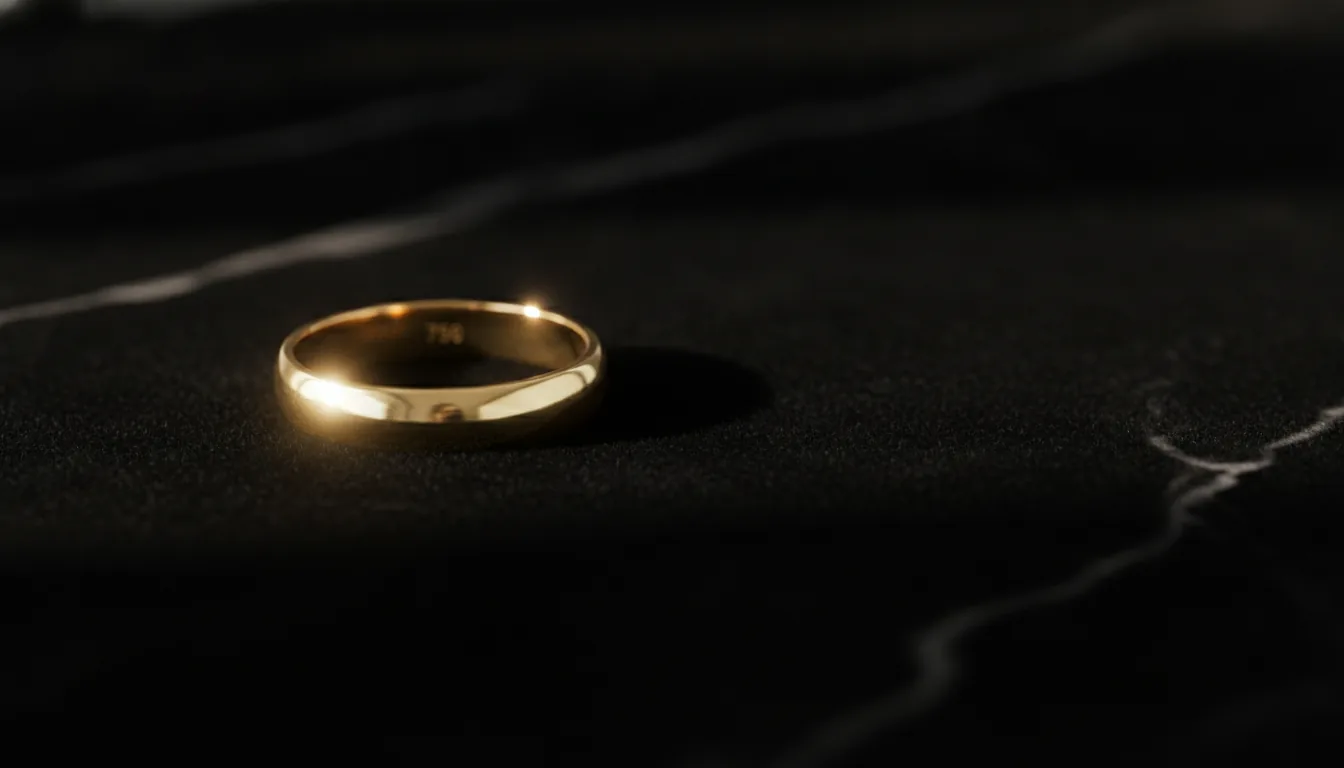
Gold purity is measured in karats, but most stamps use the metric version of that number instead. A stamp reading 750 means the metal is 750 parts per 1,000 pure gold, which is exactly what 18K means. A 585 stamp is 14K. A 916 stamp is 22K. Gold-plated items are never legally stamped with a karat number on their own, because the base metal underneath is not gold at all. If you see a stamp, look for it somewhere unobtrusive: inside a ring band, on the underside of a clasp, on the back of a setting. No stamp does not automatically mean the piece is fake, since some handmade and older pieces were never stamped, but a stamp that is present and legible is a genuine, useful signal.
Be aware that a stamp can be faked or reused from a different item entirely. It is one data point, not proof on its own. Treat it the way you would treat a single reference on a resume: worth checking, not worth trusting blindly.
The wear test
Plating is a layer measured in microns, thinner than a human hair. It wears off wherever the piece makes repeated contact with skin, fabric, or another surface. Look at the parts of the item that get the most friction: the inside of a ring, the clasp of a bracelet, the edges of a pendant that rub against clothing. On a plated piece that has seen real use, you will often see a different color starting to show through, usually a dull yellow-grey or a coppery tone where brass is exposed. Solid gold does not do this. It can scratch, and it can dull with grime, but the metal underneath a scratch is still gold, so the color does not change.
This is also why a piece that looks perfect out of the box tells you very little. Plating looks identical to solid gold on day one. The test only works with time or with an item that has already been worn.
The magnet test
Gold on its own is not magnetic. Neither is a properly made gold alloy at 18K. Many of the base metals used under plating, particularly certain steel and iron alloys, are magnetic. A strong magnet, the kind sold for jewellery testing or even a rare-earth magnet from a hardware store, will pull noticeably at a plated piece with a magnetic base metal.
This test has a real limitation: it only catches plating over a magnetic base. Brass, copper, and some other common base metals are not magnetic either, so a piece can fail to respond to a magnet and still be plated. Use this as one elimination check among several, not a final verdict.
The color and weight test
Solid gold has a distinct density. It is heavier for its size than almost any metal you will hold day to day, heavier than silver, much heavier than brass. If you can compare two pieces of similar size side by side, a solid gold piece will noticeably outweigh a plated one built on a lighter base metal. This is not precise without a proper scale and a known reference weight, but an untrained hand can often feel the difference between an item that is unexpectedly light and one that is not.
Color matters too, though less than people expect. Genuine 18K gold has a consistent, slightly muted warmth across the whole surface, uniform because the color comes from the alloy itself rather than a coating. Plated pieces can look more uniformly bright or slightly too yellow, because the thin gold layer sits over a differently colored base and manufacturers sometimes compensate with a more saturated plating alloy to make new pieces look richer. This difference is subtle and easy to misread, so treat it as a supporting clue rather than a standalone test.
When to just pay a jeweller
The four checks above will catch a large share of plated items, especially cheap ones. What they will not reliably catch is a well-made plated piece with heavy gold electroplating, sometimes called vermeil when the base is sterling silver, which can pass a casual glance and even resist a magnet if the base metal is silver or brass. For anything above a low price point, or anything you are buying specifically because it claims to be solid gold, a jeweller’s acid test or an XRF electronic tester settles the question in minutes and at low cost. The acid test uses a small scratch on an inconspicuous spot and a drop of testing acid calibrated to a specific karat, and the reaction tells the jeweller exactly what they are looking at. XRF testing is nondestructive and reads the metal composition directly, which is why most reputable dealers and pawn shops use it now.
If you are buying a piece specifically for its gold content and provenance matters to you, ask what the seller’s own authentication method is before you buy, not after. A written specification tied to the individual piece, the kind that states exactly what gold and what stones are used, is worth more than any home test, because it puts the claim in writing rather than leaving you to verify it yourself. Lux Monsters ships every piece with a signed certificate stating its exact materials, which is the kind of documentation this whole exercise is really pointing toward: you should not have to run five home tests on something you already paid for. For a deeper look at why 18K is the karat most fine jewellery and collectible objects settle on rather than 24K, see why 18K gold is used instead of 24K.
Why this distinction matters beyond jewellery
The 18K-versus-plated question used to belong only to rings, watches, and bracelets. It now applies to a wider range of collectible objects, as more categories start using real gold settings the way fine jewellery always has. The same five checks apply regardless of what the gold is attached to. A stamp, a wear pattern, a magnet response, a weight comparison, and, when it matters enough, a professional test. If you want to understand how gold settings are actually applied to an object rather than cast as a solid shape, the process behind how gold bezels are set is worth reading, since the construction method affects both durability and how you would inspect the piece for wear.
Buying real gold, in any object, is a bet that it holds its value and its appearance for decades rather than months. Plating is not a scam by itself, and it has an honest place at lower price points, but it should be sold and bought as what it is. The five checks here exist so you never have to take a seller’s word for which one you are getting.