Diamonds, Rubies, Sapphires: Which Holds Value?
Diamonds are not always the safer bet. How rubies, sapphires and diamonds really compare on rarity, treatment and long-term value.
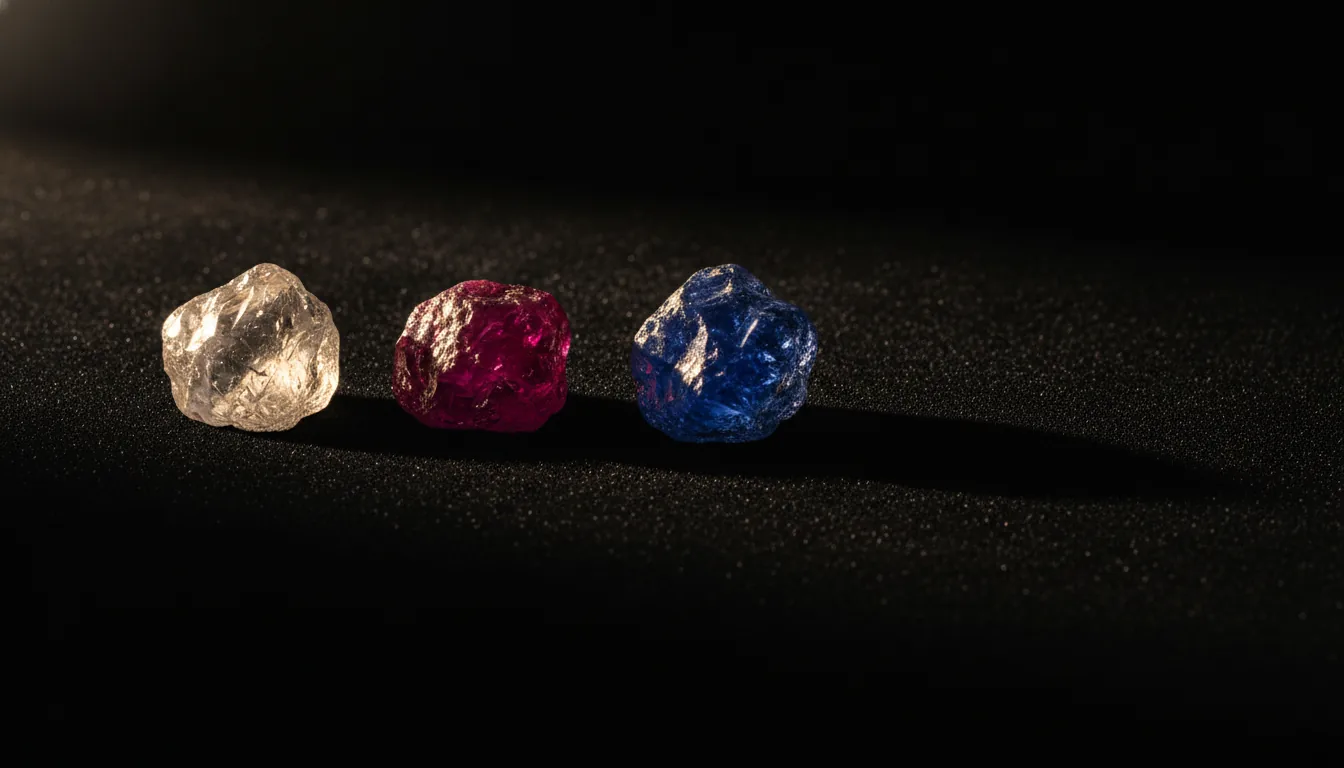
Ask a jeweler which stone holds value best and most will default to diamonds, because diamonds are the stone people know. Ask a gem trader the same question and you get a different answer. A fine ruby, gram for gram, is often the rarer and more expensive stone. Sapphire sits somewhere between the two, forgiving in quality but capable of extraordinary prices at the top end. The honest answer is that no single stone wins. What decides value is how rare that particular stone is within its own category, and whether it has been left alone by treatment. That single detail, treated or natural, moves the price of a ruby or sapphire more than almost anything else.
Diamond value comes down to four traits, and only one of them is rare
Diamond pricing follows a system most collectors have heard of even if they could not explain it: cut, color, clarity and carat weight. Cut determines how the stone handles light. Color is graded on a scale from colorless down through faint tints. Clarity measures internal inclusions, visible only under magnification in the higher grades. Carat is simply size.
The reason diamonds have a reputation as the safe, liquid choice is that this grading system is standardized worldwide, usually through a lab report from an organization such as the Gemological Institute of America. A one-carat, near-colorless, eye-clean diamond is a known quantity anywhere in the world. That predictability is valuable in itself. But predictability is not the same as scarcity. Gem-quality diamonds are mined and cut in far greater volume than gem-quality ruby or sapphire of comparable size and clarity. A diamond at the very top of the grading scale, in a large size, is genuinely rare and expensive. A diamond in the middle of the scale, which is most of what is sold, is not rare at all. It is simply well documented. If you want to understand what actually separates a collectible stone from a decorative one, the grading criteria in gem quality for collectors go through this in more detail than a single article can.
Why a fine ruby can outprice a diamond of the same size
Ruby is a variety of the mineral corundum, colored red by trace amounts of chromium. Fine rubies in larger sizes are genuinely scarce, more so than diamonds at equivalent size and clarity. The deep, saturated red that collectors describe as the finest expression of the stone is difficult to find in nature and almost never found without some internal character, since rubies of that color routinely carry visible inclusions even in top examples.
This is where ruby breaks the assumption that diamonds are automatically the premium stone. A two-carat ruby with strong, even color and no evidence of treatment can sell for a multiple of what a two-carat diamond of good quality commands. The scarcity is real. Large, clean, richly colored ruby crystals are simply harder to find in the ground than diamond crystals of similar quality. Size accelerates this fast, because the supply of larger stones drops sharply as quality holds, so a jump from one carat to three carats in fine ruby is not a linear increase in price. It is a step change.
Sapphire is the most forgiving of the three, and that has a price
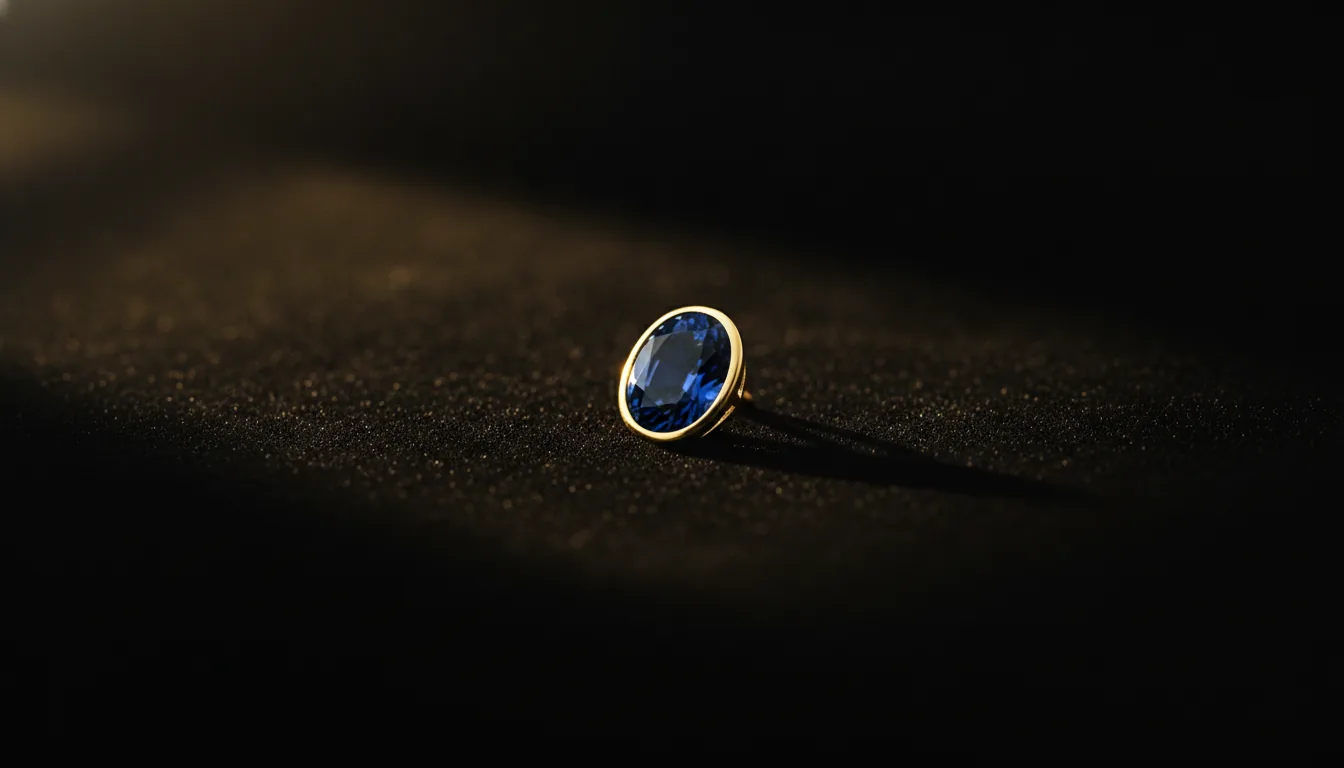
Sapphire is also corundum, and technically ruby is a red sapphire, but the trade treats them as separate categories because the market for each behaves differently. Sapphire comes in a wide range of colors, most famously a deep blue, but also pink, yellow, and other shades. This variety is part of what makes sapphire more forgiving as a category to collect. There is no single narrow target color the way there is with ruby’s red or a diamond’s colorlessness, so a buyer has more room to choose a stone on personal preference without stepping far outside what the market considers desirable.
That range in taste does not mean sapphire is a lesser stone financially. The finest blue sapphires, with strong saturation and even color across a large stone, reach prices that rival or exceed fine ruby and diamond at the same weight. What sapphire offers that the other two do not is a wider band of genuinely good, collectible quality below that ceiling. A well-chosen sapphire in the middle of the quality range tends to hold its value more predictably than a middling diamond, because the supply of good sapphire at that level is tighter relative to demand. This is really a question of what makes any object worth collecting in the first place, not just gemstones, and the reasoning in what makes a collectible valuable applies just as much to a stone as it does to a watch or a figure.
Treatment is the detail that decides whether a stone holds value
Here is the fact that matters more than the stone type itself. Almost all colored gemstones on the market today, in every price range, have been treated in some way to improve color or clarity. Heat treatment of ruby and sapphire is extremely common and, when disclosed, is broadly accepted by the trade at a lower price point than untreated stone. What damages long-term value is not treatment itself but undisclosed treatment, or treatment types the trade considers more invasive, such as filling fractures with glass or heavy chemical diffusion of color into the surface of a stone.
A natural, unheated ruby or sapphire of fine quality is rare enough that lab reports will state this explicitly, and that single line on a certificate can double or triple the price of an otherwise similar stone. Diamonds have their own version of this problem. Clarity-enhanced or color-treated diamonds exist and are legitimate products, but they are priced and sold as a distinct, lower category from natural, untreated stones. In every case, the rule is the same. Value follows honesty about what has been done to the stone, not just what the stone naturally is.
What to ask for before you buy
Whichever of the three stones you are drawn to, the same set of questions protects you. Ask whether the stone is natural or lab-grown, since both are legitimate but priced entirely differently and should never be confused. Ask whether it has been treated, and if so, how. Ask for a lab report from a recognized grading laboratory rather than a jeweler’s own assessment, since an independent report is what will matter if you ever resell or insure the piece. And keep that documentation with the stone permanently, because a gemstone without paperwork loses much of its resale credibility no matter how good it looks.
This is the same logic behind why Lux Monsters pairs every piece with a signed certificate carrying a unique serial number rather than relying on the settings to speak for themselves. A stone’s beauty is not evidence of what it is. The paperwork is. Materials only hold their promise when they can be verified, which is the whole idea behind why luxury materials belong on collectibles.
The real answer to which stone holds value
There is no fixed hierarchy where diamond beats ruby beats sapphire. Each stone has its own ceiling, its own supply story, and its own tolerance for treatment before the price collapses. What holds value across all three is the same thing that holds value in any collectible object: genuine rarity, honestly disclosed, and documented well enough that the next owner can trust it as much as you did.