Are Designer Toys a Good Investment?
Most designer toys lose value fast. Here is what actually separates the rare piece that holds its price from the thousands that do not.
If you are asking whether a designer toy is a good investment, the honest answer is that most are not. A small number hold their value or grow it over time, and the difference has almost nothing to do with how popular a figure is on the day you buy it. It comes down to three things you can check before you spend a cent: scarcity you can actually verify, materials with a value that does not depend on the toy market at all, and a paper trail proving who owned the piece before you.
What “investment” even means for a toy
An investment is something you can sell later for at least what you paid, ideally more. For that to happen, two markets have to exist at the same time. First, there has to be a resale market at all, meaning other people willing to buy secondhand at a real price, not just a listing that sits for a year. Second, the thing itself has to hold value independent of fashion, so that if the current craze fades, you are not left holding a plastic figure worth the plastic it is made of.
Most collectibles fail the second test. A vinyl or resin figure, however well designed, is worth close to nothing once its production materials are accounted for. Its entire price is the story around it: the artist, the drop, the hype at the moment of release. Stories fade. Prices follow.
Why most designer toys lose value
The designer toy market is built on scarcity claims that are often difficult to verify from the outside. A brand says a run was limited, but the buyer has no way to confirm the real number, and reissues or restocks can quietly expand supply after the fact. Once supply is uncertain, resale prices become a bet on hype rather than a bet on scarcity, and hype is the least stable thing in any market.
There is also a simple volume problem. Figures produced in the thousands or tens of thousands, however desirable at launch, saturate the resale market within a year or two. Basic economics still applies here: when supply is large and reliable, price converges toward production cost, not toward collector fantasy. This is true across almost every category of mass collectible, from trading cards to sneakers, and toy collecting economists have long pointed to it as the main reason so few pieces from any given drop era ever appreciate.
None of this means the wider market is worthless as a hobby or a design category. The designer toy market has produced genuinely interesting work and built real communities. It just means that buying for love of the object and buying for investment are two different decisions, and conflating them is how most people lose money.
The three things that actually hold value
Look at any category of collectible that has reliably held or gained value over decades, whether that is watches, fine art, or jewelry, and you find the same three traits repeating.
The first is scarcity you can verify, not scarcity you are told about. A number stamped on the object, matched to a public or semi-public record, that cannot quietly grow after the fact. What makes a collectible valuable usually starts here, because verifiable scarcity is the only kind a buyer can actually price.
The second is a materials floor. If a piece contains gold, natural gemstones, or another material with an independent market price, that price acts as a floor under the whole object, even in the worst case where the design falls out of fashion completely. A toy made entirely of vinyl or resin has no such floor. It is worth what someone will pay for the story, and nothing else.
The third is provenance, meaning a documented record of ownership and authenticity that survives the object changing hands. This is the same mechanism that protects value in watches and fine art. A buyer three owners down the line needs to be able to confirm the piece is genuine and trace it back to its origin, or the resale price collapses to guesswork. Scarcity as luxury is really a discussion of this same idea from the seller’s side.
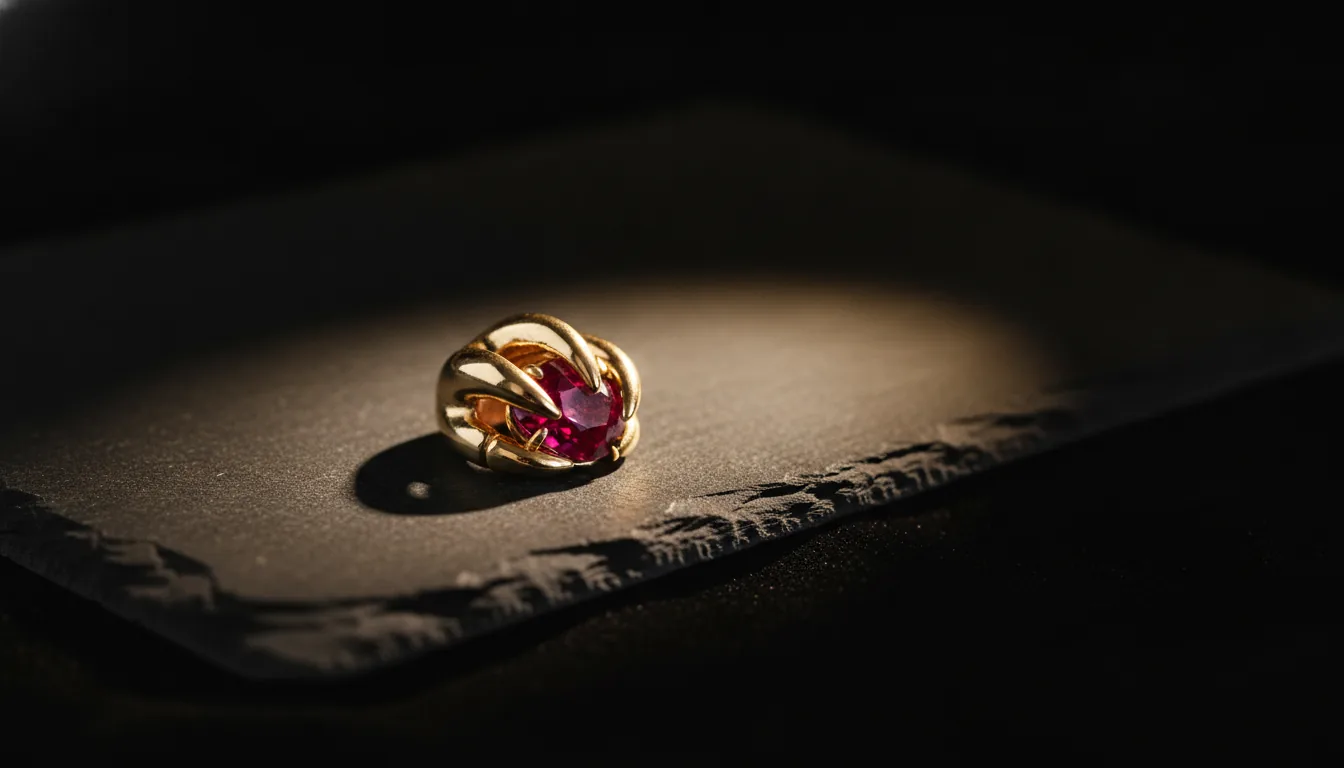
Most designer toys have none of these three. A few, including some pieces made with real gold and gemstone settings rather than plastic and paint, are built with all three in mind from the start. Lux Monsters figures are an example of the second category, individually numbered in small closed editions, set with solid 18K gold and natural stones, and sold with a signed certificate carrying that number. That combination does not guarantee appreciation, nothing does, but it gives a buyer something to actually evaluate instead of a hype cycle to guess at.
How to check a piece before you treat it as an investment
Before you buy anything with resale value in mind, ask what the edition number is tied to. If the answer is a brand’s word and nothing else, treat the piece as a purchase for enjoyment, not an investment. If the number is matched to a certificate or a public registry, that is a real signal.
Ask what the object is made of, separate from the design. A figure made of resin, vinyl, or plush alone has no floor value beyond the cost of goods, so any resale price above that is pure sentiment. A piece with gold or gemstone content has value from the materials market itself, on top of whatever the design is worth. How we authenticate every piece is one example of how that kind of claim can be made checkable rather than taken on faith.
Ask whether the seller can produce documentation that will still mean something to a buyer you have never met, years from now. A receipt from a hype drop proves you bought something. A signed certificate with a serial number proves what you bought, and that it is genuine.
What this means if you are buying to keep, not to flip
If you are buying because you love the object, none of this changes your decision much. Buy what you like, at a price you are comfortable never seeing again. That is true of nearly every collectible category and always will be.
If you are buying with resale or appreciation in mind, be honest about which of the three traits the piece actually has. Most designer toys have zero of them, which is fine as a hobby purchase but a poor basis for an investment claim. A small number have all three, and those are the pieces where a real resale market has any chance of forming over time.
The gap between a toy and a collectible with lasting value was never about which one looks better on a shelf. It is about whether anyone, years from now, can verify what it is, what it is made of, and who had it before you.