A Collector's Guide to Gem Quality
A plain-spoken guide to the Four Cs for collectors who own objects with real stones set in 18K gold, not costume pieces.
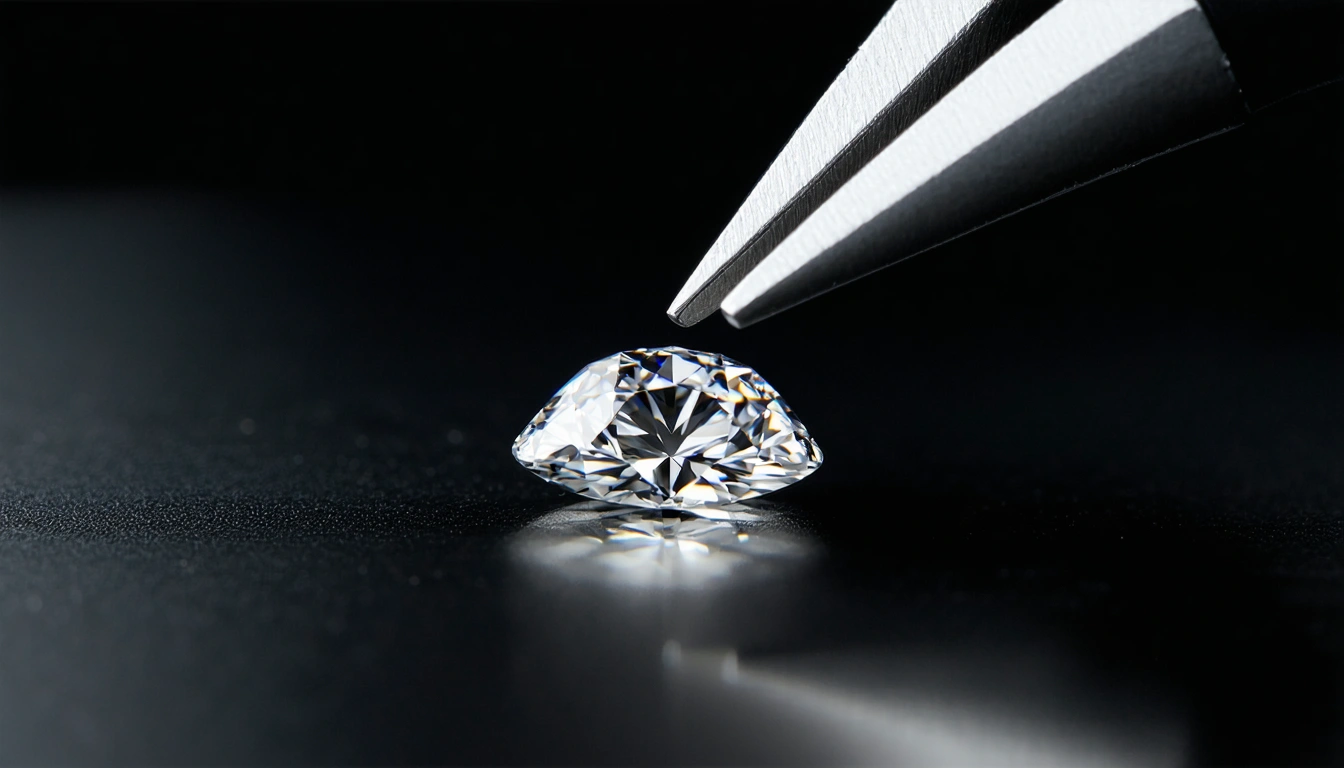
You bought the piece because of what it is. Then you notice the eyes. Two diamonds the size of a grain of salt, or two rubies that seem to hold the room inside them. That moment is when gem quality stops being an abstract topic and becomes yours.
This guide is for collectors, not for jewelers. You do not need a loupe or a lab report to enjoy what you own. You do need to know why the stones matter.
Why real stones change the object
A collectible with glass or cubic zirconia eyes has one life. It looks a certain way under a showroom light and another way under your lamp at home. Real gems behave differently. Light enters them, travels a complicated path, and comes back out changed. That is not poetry. It is physics. It is also the reason a diamond still sparkles in candlelight while a CZ goes flat the moment the spotlight moves.
When we set two real diamonds in the eyes of CaratCry, or two real rubies in RubyRuin, we are not adding decoration. We are adding an optical instrument. The object has presence now. It answers the room.
The Four Cs, in the order collectors should care about them
Jewelers teach the Four Cs as clarity, cut, color, and carat. The order is alphabetical. For a collector looking at a figurine with two small stones, the order of importance is different. It goes cut, color, clarity, carat. Here is why.
Cut decides whether the stone looks alive. Color decides the mood. Clarity decides whether you see flaws under a loupe. Carat decides how much stone is there. When the stones are small, cut and color do almost all of the work.
Cut, the one that matters most
Cut is not the shape. Cut is the quality of the faceting. A well-cut diamond returns the maximum amount of light through the top. A poorly cut diamond leaks light out of the bottom or sides. Two stones of identical weight and clarity can look nothing alike if one has a better cut.
For a small stone set as an eye, cut is everything. You are not trying to show off carat. You are trying to catch a gaze across a room. That requires precision faceting, tight symmetry, and the right proportions. We specify Excellent or Very Good cut grades for every diamond that enters the Paris Factory. Below that, the stone cannot do the work we need it to do.
Rubies are faceted differently. Color is the main driver, but cut still decides how evenly the color distributes and how much light returns to your eye. A flat, sleepy ruby is a failure, no matter how red the raw material was.
Color, the one that defines the character
Diamonds are graded on a color scale from D to Z. D is colorless. Z is noticeably yellow or brown. For CaratCry, we work within the D to G range. That keeps the diamonds cold. Icy. A warmer diamond would undo the character’s entire premise. CaratCry is precise and unreachable. Warm diamonds feel friendly. We do not want friendly.
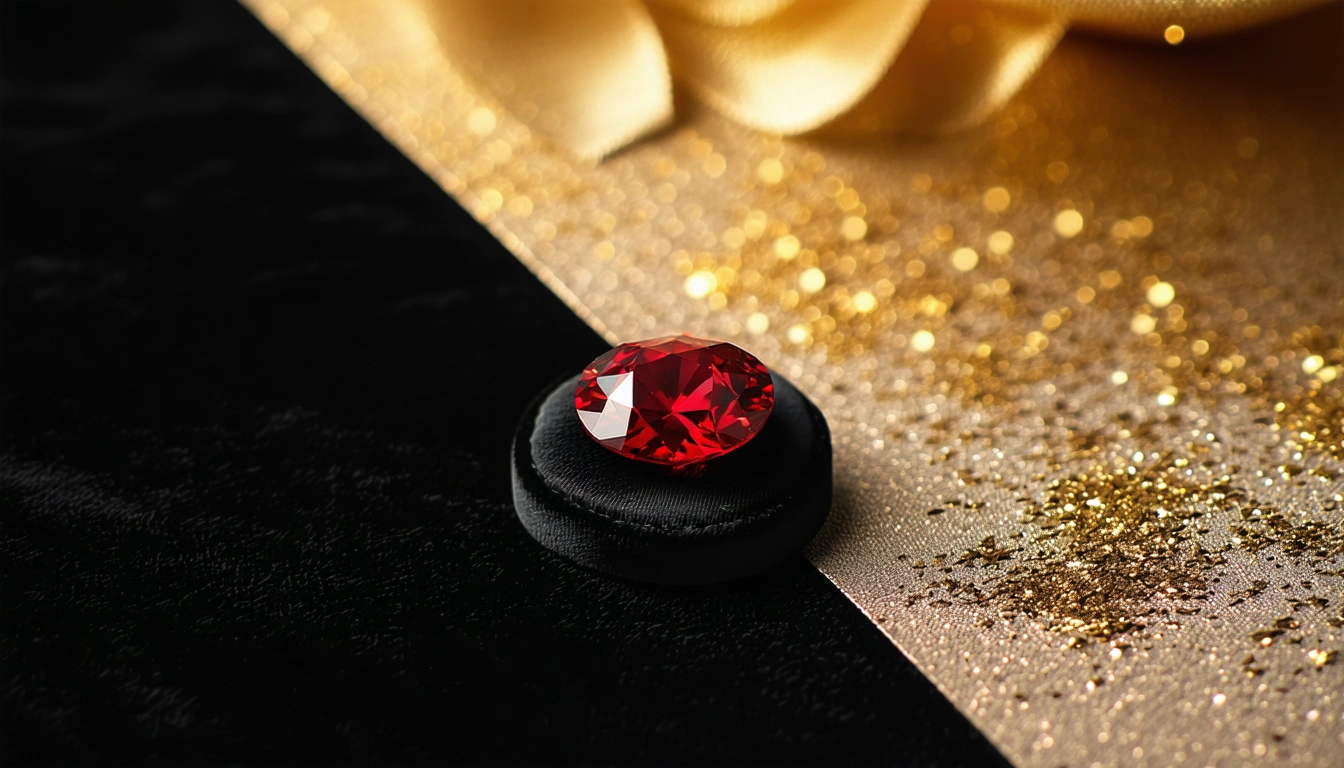
Rubies are graded on hue, saturation, and tone. The trade calls the ideal red “pigeon blood”, a phrase that sounds more dramatic than it should. What it describes is a pure red with a slight fluorescent quality, no brown undertone, no pink drift. That is the color we want in RubyRuin. The character is meant to devour light, not reflect it. A brownish ruby cannot do that. A pinkish one turns cute too fast. The narrow window in between is where the piece lives.
Mint Slime is the exception. Its eyes are sapphires, graded on a separate scale. We work in a mid-saturation cornflower blue. Not royal. Not pale. The color reads as soft mint’s counterweight, cool against the pink slime motif.
Clarity, the one collectors overthink
Clarity is how clean the stone is inside. Flawless is the top. Included is the bottom. The scale in between has eleven grades.
For stones this small, clarity rarely matters the way collectors worry it does. An SI1 inclusion in a 0.10 carat diamond is invisible to you. You would need a ten-power loupe and a trained eye. What you care about is whether the stone looks clean in normal light. We set at VS2 or better. That guarantees an eye-clean stone every time, without charging you for theoretical perfection you cannot see.
For rubies, clarity is graded on a different scale because nearly every ruby has inclusions. A ruby with no inclusions would be suspect. The question is whether the inclusions interfere with the color or the brilliance. Ours do not.
Carat, the one marketing loves
Carat is weight. One carat is 0.20 grams. Collectors often hear “carat” and assume bigger is better. For a figurine’s eye, bigger is usually worse.
The eye module on our Rare pieces holds stones in a specific size range, chosen to match the proportions of a 12 cm plush body. Too small and the eye reads as dull metal. Too large and the piece tips into costume. The stones we use sit between 0.08 and 0.15 carats each. That is not a marketing number. It is a design number. It is also the number that keeps the piece feeling like a piece of art rather than a piece of jewelry pretending to be one.
What to ask when you buy anything gem-set
If you are shopping beyond Lux Monsters, here is the short list you should bring to any purchase.
Ask for the cut grade, not the shape. A round brilliant is a shape. Excellent is a grade. You want the grade.
Ask for the color grade on a standard scale. For diamonds, GIA’s D to Z. For coloured stones, ask where the stone sits on hue, saturation, and tone. Anyone serious can answer this.
Ask for the clarity grade and whether the stone is eye-clean. Those are two different questions, and both answers matter.
Ask where the stone was sourced. You are paying for provenance as much as for the mineral.
Ask whether the stone is treated. Most rubies are heat-treated, and that is accepted practice. Fracture-filled rubies are a different story. Know which you are buying.
Certification, briefly
Every Rare piece in Edition 01 ships with a Certificate of Authenticity that records the gem specifications. For CaratCry and RubyRuin, that means two stones per piece, each with its own grading entries. The certificate sits inside the luxury presentation box. It is not there to impress you. It is there so that ten years from now, when the piece changes hands, the next collector knows exactly what they hold.
An independent lab report is different from a brand certificate. A lab report, like one from GIA or AGL, grades the stone on its own. A brand certificate records what we set into which piece, when, and by whom. Serious collectors want both. We provide the brand record. For anyone who wants an independent lab report on a specific stone, we can arrange that before the piece is set, at cost.
Treatments, stated plainly
Nearly every ruby on the market has seen heat. Heat treatment at high temperature improves clarity and deepens color, and the trade accepts it as standard practice. What the trade does not accept is glass-filling or beryllium diffusion. Those alter the stone beyond what heat can do, and they lower value permanently. We do not buy filled or diffused rubies. Full stop.
Diamonds can be treated too. High-pressure high-temperature treatment can shift color. Laser drilling can remove visible inclusions. Clarity-enhanced diamonds have had fractures filled with a glass-like material. None of these enter the Paris Factory. Our diamonds are natural, untreated, and graded on their own merit.
Sapphires are similar to rubies. Heat is expected. Anything more is disclosed or refused.
Origin, and why it matters more than you think
Two diamonds of identical grade can have very different histories. One may come from a mine with documented labor practices, independent audits, and a paper trail that survives customs. The other may not. The grading certificate will not show that difference. Only the provenance will.
We source through a small number of suppliers in Antwerp and Geneva who can trace every stone back to its mine of origin. The premium is small. The peace of mind is large. You are buying an heirloom object. Heirlooms should not carry shadows.
Rubies come primarily from Mozambique and Myanmar. The Mozambique material is ethically tractable. The Myanmar material is harder to verify, and we avoid it. When a ruby enters our workshop, it comes with its country of origin recorded, and that record stays with the piece for its entire life.
What gem quality actually protects
The reason we insist on these standards is not perfectionism. It is time.
A stone graded well and set well will look the same in forty years as it does today. A stone chosen for its size but ignored on cut will disappoint you within months. The eyes will go dim. You will stop picking the piece up.
Lux Monsters is built to last beyond the first owner. That is why we spend the money on quality that outlives the edition. You are not buying a decoration. You are buying an object that should be passed forward.
The piece speaks for itself
You will not need any of this when you first open the box. You will see the eyes and know. But the language is useful later, when you are choosing a second piece or a third, or when a friend asks why it matters that the stones are real.
The short answer is that real gems age with you. Synthetic ones do not. We think that difference is worth the craft.